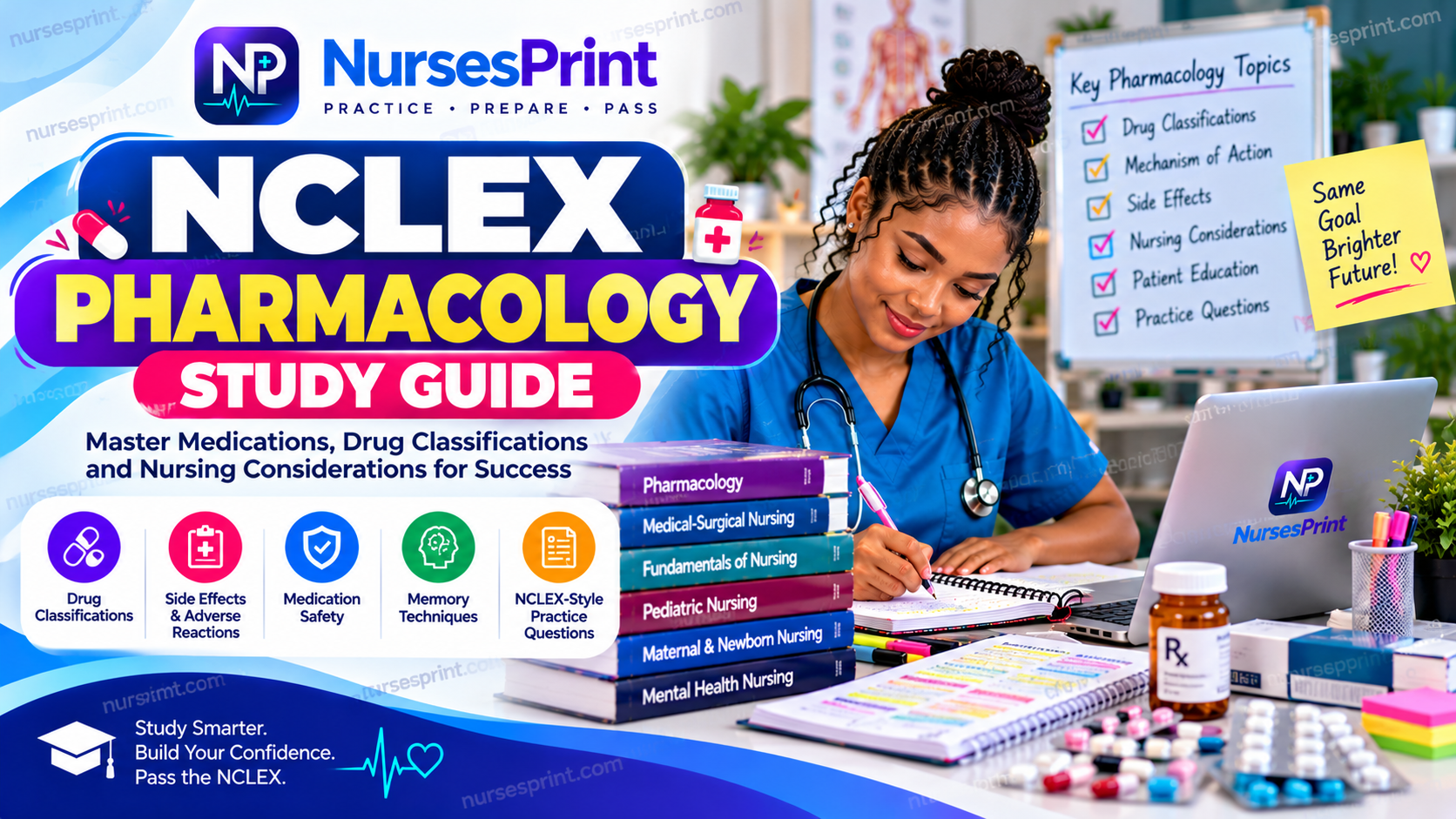
Pharmacology is one of the most challenging subjects for nursing students preparing for the NCLEX. With numerous medications, drug classifications and potential adverse effects to understand, knowing where to begin can feel overwhelming.
However, mastering nursing pharmacology does not require memorizing every medication individually. Understanding drug classifications, recognizing medication safety principles and practicing clinical scenarios can make studying more effective.
These seven NCLEX pharmacology study tips will help you organize your preparation and strengthen your medication knowledge.
1. Focus on Major Drug Classifications
Instead of memorizing hundreds of medications separately, begin by understanding common drug classifications.
Important categories include:
Antihypertensives
Antibiotics
Anticoagulants
Diuretics
Analgesics
Antidiabetic medications
Cardiovascular medications
Learn each classification's primary purpose, mechanism of action and important nursing considerations.
For example, understanding how beta-blockers affect heart rate and blood pressure can help you recognize important patient assessment findings.
This approach makes pharmacology easier to understand and remember.
2. Understand Medication Side Effects and Adverse Reactions
Recognizing medication-related complications is essential for safe nursing practice.
When studying medications, distinguish between expected side effects and potentially serious adverse reactions.
Pay particular attention to symptoms that require immediate nursing assessment.
For example, unusual bleeding in a patient receiving anticoagulant therapy may indicate a significant safety concern.
The U.S. Food and Drug Administration's medication safety resources provide authoritative information about medications and their safe use.
Understanding medication risks helps strengthen your clinical judgment.
3. Practice NCLEX Pharmacology Questions Regularly
Practice questions help transform theoretical knowledge into practical nursing decisions.
Rather than focusing exclusively on memorization, answer questions involving patient assessments, medication administration and potential complications.
After each practice session, review the explanations for both correct and incorrect answers.
Explore the nursing examination preparation resources available through NursesPrint to support your learning.
Consistent practice helps identify weaknesses and improves familiarity with examination-style scenarios.
4. Learn Medication Administration Safety Principles
Medication safety is an essential responsibility for every nurse.
Review fundamental administration principles, including verifying the correct patient, medication, dose, route and time.
Remember that safe medication administration also involves appropriate documentation, patient assessment and monitoring.
Understanding these responsibilities is particularly important when answering prioritization questions.
The World Health Organization's Medication Without Harm initiative highlights the importance of preventing medication-related harm.
Applying these principles can improve your understanding of safe nursing interventions.
5. Use Flashcards to Remember Important Medications
Flashcards are useful for reviewing medications and reinforcing important information.
Create cards containing:
Medication or drug classification
Primary therapeutic use
Important adverse effects
Nursing assessments
Patient education considerations
Review difficult cards frequently while gradually increasing the intervals between successful reviews.
This technique helps reinforce long-term memory.
Digital flashcards can also make revision more convenient during short study sessions.
6. Connect Pharmacology With Clinical Scenarios
Understanding how medications affect real patients is more valuable than memorizing isolated facts.
For example, when reviewing insulin, consider how blood glucose measurements, meal timing and hypoglycemia symptoms influence nursing decisions.
Similarly, when studying diuretics, consider fluid balance, electrolyte monitoring and patient assessment.
Connecting pharmacology concepts with realistic situations strengthens clinical reasoning.
It also helps you recognize what a question is asking before selecting an answer.
7. Review Weak Areas Before Your Examination
As your examination approaches, identify medication topics that consistently cause difficulty.
Dedicate additional revision time to these subjects instead of repeatedly studying material you already understand.
Use practice questions to evaluate your progress.
Review medication safety principles and important nursing interventions regularly.
Avoid attempting to memorize unfamiliar drug information immediately before the examination.
Consistent revision is more effective than overwhelming yourself with last-minute material.
Final Thoughts: Strengthen Your NCLEX Pharmacology Preparation
Mastering pharmacology requires consistent practice, strong medication safety knowledge and an understanding of how drugs affect patients.
By studying major classifications, reviewing adverse reactions and applying knowledge to clinical scenarios, you can improve your preparation.
Remember that the NCLEX evaluates your ability to make safe nursing decisions rather than simply recall medication names.
Ready to improve your nursing exam preparation?
Visit NursesPrint to explore nursing study resources and strengthen your understanding of important examination topics.
Study Smarter. Practice Consistently. Prepare With Confidence.