Medical-surgical nursing can feel like studying several nursing courses simultaneously. One moment you're reviewing heart failure. The next you're interpreting blood glucose levels or assessing respiratory complications.
With so many conditions to understand, preparing for medical-surgical nursing questions on the NCLEX can become overwhelming.
However, successful preparation isn't about memorizing every disease. It's about recognizing important clinical findings and understanding how nurses respond to patient needs.
This guide shares seven practical strategies to help you strengthen your med-surg knowledge and approach NCLEX questions confidently.
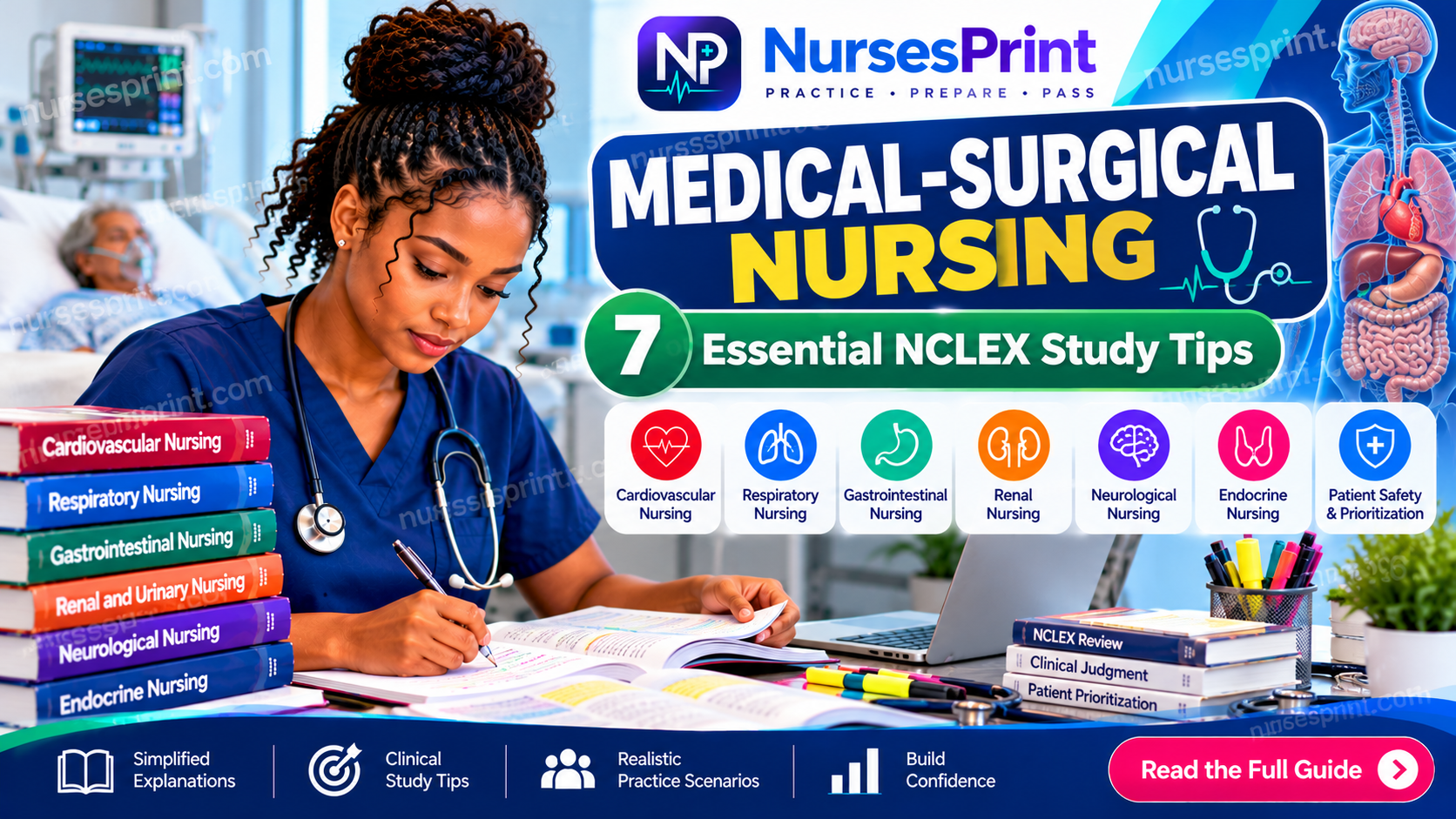
1. Organize Your Studying by Body System
Studying medical-surgical nursing becomes easier when you organize conditions by body system.
Start with the major systems:
Cardiovascular
Respiratory
Neurological
Endocrine
Renal
Gastrointestinal
For each condition, review its causes, common symptoms, diagnostic findings and nursing interventions.
Focus on understanding how the condition affects normal body functions.
2. Master Common Cardiovascular Conditions
Cardiovascular disorders are important topics in nursing education.
Prioritize conditions such as heart failure, hypertension, myocardial infarction and dysrhythmias.
Learn to recognize warning signs including chest discomfort, shortness of breath and sudden changes in circulation.
Understanding these findings helps you identify patients who may require urgent assessment.
For reliable cardiovascular health information, explore the American Heart Association's health resources.
3. Strengthen Your Respiratory Nursing Knowledge
Respiratory questions often require you to recognize impaired oxygenation.
Review asthma, chronic obstructive pulmonary disease, pneumonia and respiratory failure.
Understand common assessment findings and appropriate nursing responses.
Practice interpreting oxygen saturation, respiratory rate and changes in breathing patterns.
Remember that acute respiratory deterioration requires prompt clinical attention.
4. Understand Endocrine and Renal Disorders
Endocrine conditions can affect multiple body systems.
Focus on diabetes mellitus, hypoglycemia, hyperglycemia and thyroid disorders.
For renal nursing, review acute kidney injury, chronic kidney disease and fluid balance.
Learn how abnormal laboratory findings relate to patient conditions.
The National Institute of Diabetes and Digestive and Kidney Diseases provides authoritative educational information about diabetes and kidney disorders.
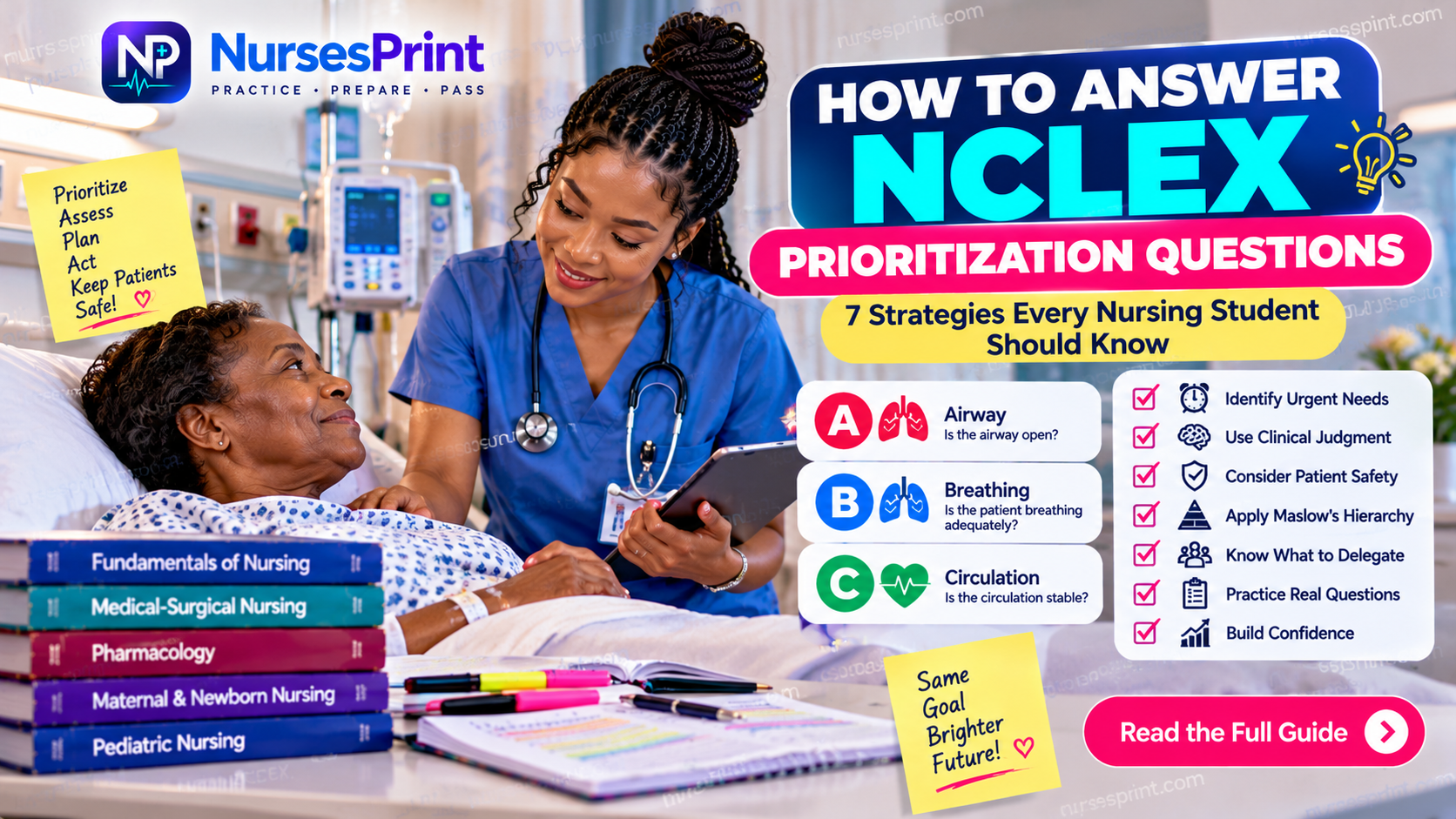
5. Practice Patient Prioritization Questions
Medical-surgical nursing requires recognizing which patient needs immediate attention.
Consider the difference between a stable patient requesting routine assistance and a patient experiencing sudden respiratory distress.
The second patient generally requires more urgent assessment.
Practice identifying:
Unexpected changes in consciousness
Severe breathing difficulties
Signs of shock
Uncontrolled bleeding
Sudden neurological changes
Always evaluate the complete clinical situation before selecting an intervention.
6. Use Med-Surg NCLEX Practice Questions
Practice questions help you apply theoretical knowledge to realistic clinical situations.
Instead of memorizing answers, review the reasoning behind each correct response.
Pay attention to why alternative interventions may be inappropriate.
You can explore NursesPrint nursing practice resources to support your medical-surgical nursing preparation.
Consistent practice helps reveal knowledge gaps and strengthens clinical reasoning.
7. Create a Simple Med-Surg Revision Schedule
Divide your preparation into manageable study sessions.
For example:
Monday: Cardiovascular disorders
Tuesday: Respiratory conditions
Wednesday: Endocrine disorders
Thursday: Renal and gastrointestinal nursing
Friday: Neurological conditions
Saturday: Mixed practice questions
Sunday: Review difficult concepts
Adjust your schedule according to your available time and weakest subjects.
Quick NCLEX Practice Question
A nurse is caring for four patients. Which patient requires immediate assessment?
A. A stable patient requesting discharge instructions.
B. A patient experiencing mild postoperative discomfort.
C. A patient with sudden shortness of breath and oxygen saturation of 84%.
D. A patient requesting assistance with lunch.
Correct Answer: C
Rationale: Sudden respiratory distress accompanied by low oxygen saturation indicates potentially serious deterioration requiring immediate assessment and intervention.
Frequently Asked Questions
Is medical-surgical nursing difficult on the NCLEX?
It can be challenging because questions involve multiple body systems and require clinical judgment.
How should I study med-surg for the NCLEX?
Organize conditions by body system, understand important nursing interventions and practice clinical scenarios regularly.
Are med-surg practice questions helpful?
Yes. Practice questions help students apply nursing concepts and identify areas requiring additional review.
Final Thoughts: Build Strong Med-Surg Nursing Knowledge
Medical-surgical nursing becomes more manageable when you focus on understanding clinical concepts rather than memorizing isolated facts.
Study consistently, strengthen your weakest subjects and practice making safe nursing decisions.
Ready to improve your NCLEX preparation?
Explore NursesPrint for nursing examination practice resources.
Understand the condition. Recognize the risks. Choose the safest nursing action.